RV Solar Setup for Beginners: A Florida-Specific Starter Guide
By Hilario Herrera · Last updated ·Research-based guide · Some links are paid links (disclosure).
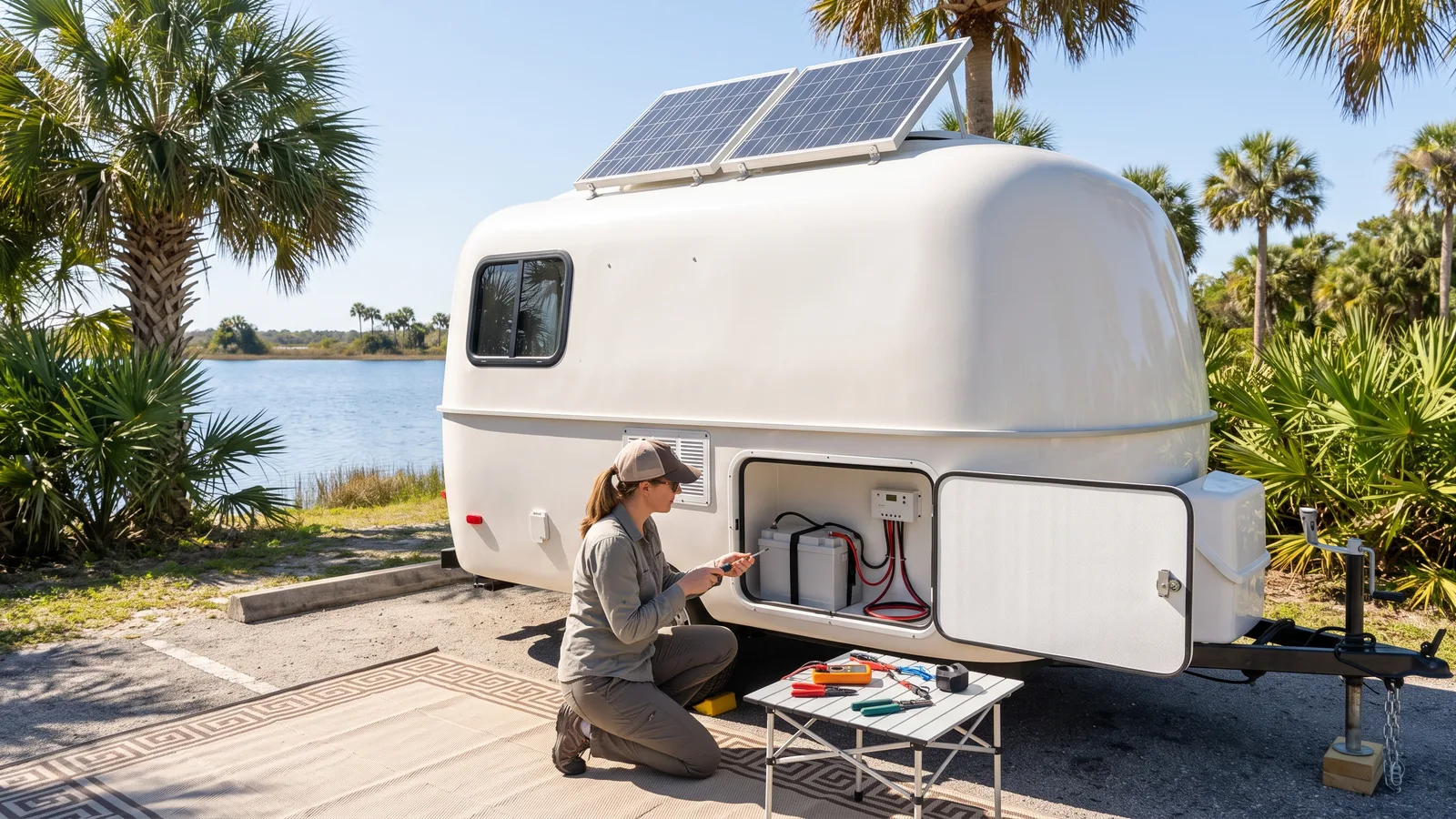
Setting up solar on an RV can feel overwhelming the first time you look at a wiring diagram, but the core system is the same across almost every setup: panels, a charge controller, a battery bank, and an inverter if you need AC power. This guide walks through the basics for a beginner, with extra attention to the things that matter specifically in Florida’s climate — intense heat, high humidity, afternoon thunderstorms, and hurricane season.
This is a general educational overview based on published product specifications and common installer guidance, not a substitute for a licensed RV electrician or the specific instructions that come with your equipment.
Quick Picks
| Component | Why it’s a reasonable starting point |
|---|---|
| 100W–200W portable solar panel kit | Good starter wattage for occasional boondocking without a permanent roof install |
| MPPT charge controller | More efficient than older PWM controllers, especially in variable Florida sun/cloud conditions |
| 100Ah+ lithium (LiFePO4) battery | Handles heat better than lead-acid and tolerates deeper discharge cycles |
| Pure sine wave inverter | Needed if you’re running sensitive electronics off battery power |
Step 1: Figure Out How Much Wattage You Actually Need
Before buying anything, add up the daily watt-hours (Wh) your RV appliances use. A basic starting formula: appliance wattage × hours used per day = watt-hours per day. Sum those across everything you plan to run (fridge, fans, phone chargers, laptop, lights), then size your solar array so it can realistically replace that many watt-hours on an average Florida sun day.
Florida generally gets strong solar exposure much of the year, but summer afternoon thunderstorms are extremely common and can knock out several hours of usable sun. Many beginners size their system with a buffer — planning for more cloudy-day capacity than a drier climate might need — precisely because of this pattern.
As a rough starting point that many beginner guides reference:
- Occasional weekend use, minimal appliances: 100–200W of panels
- Regular boondocking, fridge + electronics: 300–600W of panels
- Full-time off-grid living with AC-dependent appliances: 800W+ and a larger battery bank
Step 2: Portable vs Roof-Mounted Panels
Portable panels you set up outside the RV and move to follow the sun are a common beginner choice because they’re cheaper to start with, don’t require drilling into the roof, and — importantly for Florida — can be brought inside before a storm. The tradeoff is you have to manually deploy and store them, and they can’t charge while you’re driving.
Roof-mounted panels charge continuously while parked or driving and don’t require manual setup, but they’re a permanent installation that involves roof penetrations (or specialized adhesive mounts) and, per general solar-panel wind-load guidance, may be exposed to storm winds if you can’t easily remove them. If you go this route, ask about the mounting hardware’s wind rating, particularly if you’ll be storing or camping in Florida during hurricane season (June–November).
A common beginner approach is to start with a portable kit to learn the system, then add roof panels later if the RV becomes a more permanent or full-time setup.
Step 3: Charge Controllers — MPPT vs PWM
The charge controller regulates power flowing from panels to battery so you don’t overcharge or damage the battery. There are two main types:
- PWM (Pulse Width Modulation): Simpler and less expensive, but less efficient, especially when panel voltage doesn’t closely match battery voltage.
- MPPT (Maximum Power Point Tracking): More efficient — it can extract more usable power from the same panels, particularly useful on partly cloudy days or when panel and battery voltages don’t align perfectly. Most beginner guides recommend MPPT for anything beyond a very small, single-panel setup.
Step 4: Battery Basics
Two chemistries dominate RV battery choices:
| Battery Type | General Characteristics | Florida Heat Consideration |
|---|---|---|
| Lead-acid (AGM/flooded) | Lower upfront cost, heavier, shorter cycle life | More sensitive to heat degradation over time |
| Lithium (LiFePO4) | Higher upfront cost, lighter, longer cycle life, deeper safe discharge | Generally more heat-tolerant, though manufacturers still specify a maximum operating temperature range |
Whichever chemistry you choose, check the manufacturer’s published temperature range — Florida attics, storage bays, and roof-adjacent compartments can get extremely hot in summer, and batteries stored outside their rated range can lose capacity or lifespan faster than in milder climates.
Florida Heat and Humidity Considerations
- Panel efficiency dips slightly in extreme heat. Solar panels are typically rated at a standard test temperature, and output can drop somewhat as panel temperature rises above that — a well-known characteristic of PV panels in general, not unique to any one brand.
- Humidity and salt air accelerate corrosion on connectors and mounting hardware, especially near the coast. Marine-grade or sealed connectors are commonly recommended.
- Afternoon storms mean variable charging. MPPT controllers and slightly oversized arrays help offset lost charging time during Florida’s predictable summer storm patterns.
- Ventilation matters for batteries and inverters. Enclosed compartments in direct Florida sun can trap heat; many installers recommend ventilated or shaded battery boxes.
FAQ
How much solar wattage do I need for basic RV boondocking in Florida? Many beginners start in the 200–400W range for basic fridge, lighting, and device charging, then adjust based on actual daily watt-hour usage and how much cloud cover they typically encounter.
Is lithium worth the extra cost over lead-acid for a Florida RV? It’s a common upgrade because lithium batteries generally tolerate heat and deep discharge cycles better and last longer, but it comes at a higher upfront price — many beginners start with AGM and upgrade later.
Should I worry about hurricanes if I have roof-mounted RV solar? Yes, it’s worth checking the wind rating of your mounting hardware and having a plan (such as relocating the RV or reinforcing tie-downs) — this is a general consideration to research with your installer, not something this guide can determine for your specific setup.
Do I need an inverter for basic RV solar? Only if you want to run standard AC-powered devices (laptops, some appliances). Many basic setups running only DC devices (lights, fans, USB chargers) can skip the inverter initially and add one later.
Can portable panels keep up with roof-mounted ones? For occasional and moderate use, portable panels can provide comparable power, with the added benefit of being repositionable toward the sun and easy to store before storms — the main tradeoff is manual setup and no charging while driving.