Best Portable Power Stations for Camping in Florida (Buyer's Guide)
By Hilario Herrera · Last updated ·Research-based guide · Some links are paid links (disclosure).
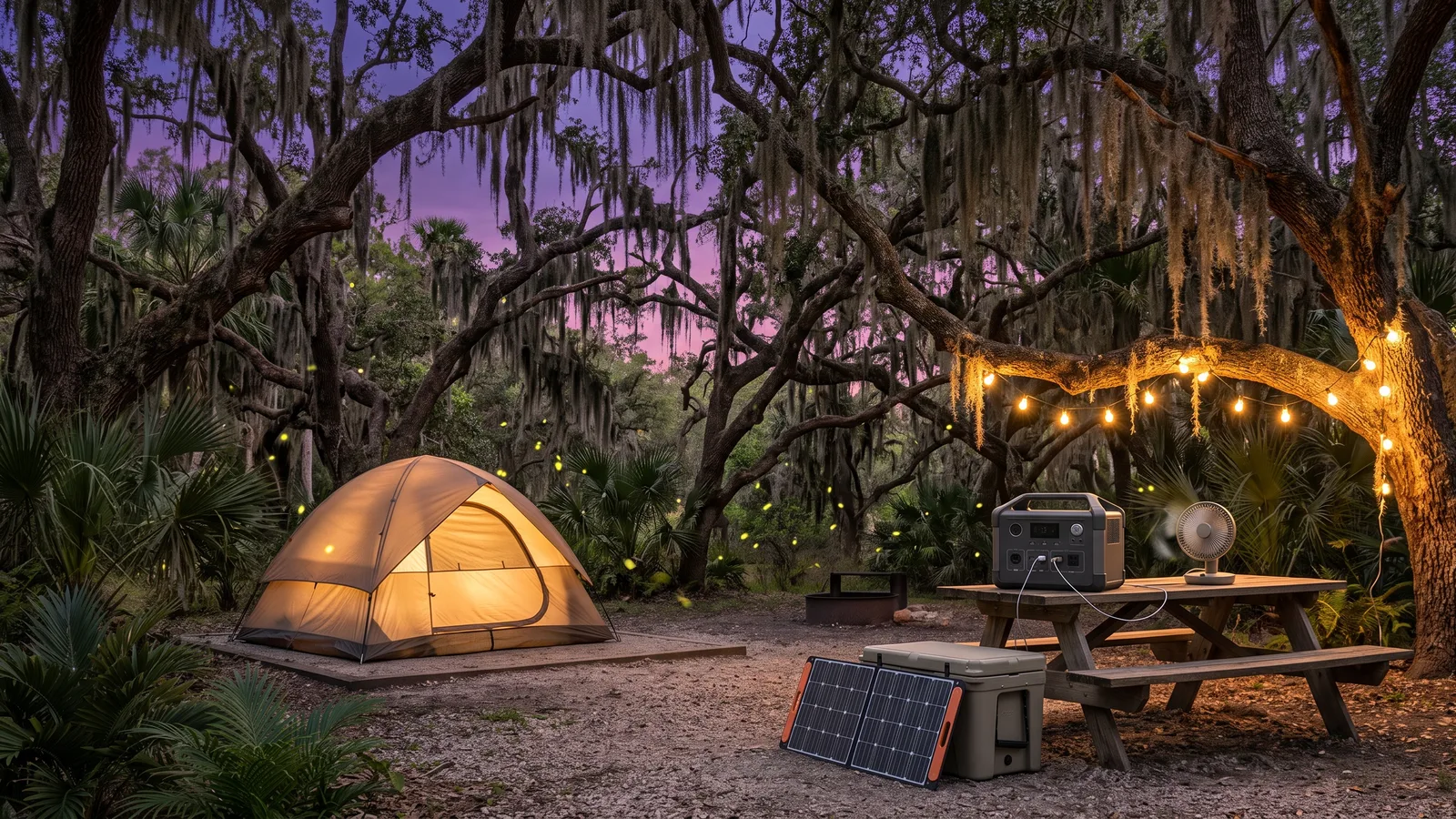
Camping in Florida comes with two challenges most other states don’t have year-round: intense heat and humidity, and the real possibility of sudden thunderstorms even on otherwise sunny trips. A portable power station can keep phones charged, fans running, and a cooler cold, but picking the right size and build matters more here than in milder climates. This guide summarizes published manufacturer specs and reviewer coverage to help you compare capacity tiers and features — it’s not a first-hand product test.
Quick Picks by Budget Tier
| Tier | Example Category | One-line rationale |
|---|---|---|
| Budget (~$250–$300) | Compact power stations under 300Wh | Enough for phones, lights, and a fan on a short weekend trip |
| Mid-range (~$350–$450) | 1,000Wh-class power stations | Reviewer coverage in 2026 highlights this tier for balancing capacity, output, and portability |
| Larger capacity (~$1,500–$2,500) | 2,000Wh-class power stations | Better suited to running a cooler, CPAP, or multiple devices over several days |
| Home-backup-capable | 4,000Wh+ power stations | Overkill for typical camping, but doubles as hurricane-season home backup |
Specific prices and specs change frequently — always confirm current listings before purchasing.
How to Size a Power Station for Camping
Start by listing what you actually want to run and for how long, in watt-hours (Wh). A basic way to estimate: device wattage × hours of use = watt-hours needed. Add up your devices for a typical camping day, then look for a power station with a rated capacity comfortably above that total, since real-world usable capacity is usually somewhat lower than the rated number due to inverter losses.
As a general guide reflected in current camping-gear coverage:
- Weekend, device-charging only (phones, lights, small fan): power stations in the 250–600Wh range are often enough
- Multi-day trips with a cooler or CPAP machine: 1,000Wh-class units are a common recommendation
- Extended off-grid stays or group camping: 2,000Wh+ units, often paired with solar panels for recharging
Comparison Table: Capacity Tier vs Typical Use Case
| Capacity Range | Typical Camping Use Case | Recharge Time (solar, general estimate) |
|---|---|---|
| Under 300Wh | Phone/device charging, small LED lighting | A few hours with a small portable panel |
| 300–600Wh | Fan, lights, device charging over a weekend | Roughly half a day with a mid-size panel |
| 600–1,200Wh | Cooler, CPAP, multiple devices, longer trips | Around a full day of good sun with matched solar input |
| 1,200Wh+ | Group camping, longer off-grid stretches, appliance backup | Multiple days, or faster with higher-wattage solar input |
Recharge times vary significantly based on the specific unit’s maximum solar input rating and actual sunlight conditions — check the manufacturer’s specified solar input wattage before assuming a given recharge speed.
Heat Tolerance: Why It Matters More in Florida
Lithium battery chemistries (including the LiFePO4 batteries used in many current power stations) generally have a manufacturer-specified operating and storage temperature range. Leaving a power station in a hot car trunk, a closed tent, or direct Florida midday sun can push internal temperatures toward or beyond that range, which can trigger built-in thermal protection that reduces output or pauses charging until the unit cools down. Reviewers commonly note that units with visible cooling fans or vents handle sustained high-output use in hot weather more gracefully than fully sealed, fanless designs — check the product’s operating temperature spec and any built-in thermal management features before buying if you plan to camp through a Florida summer.
Weatherproofing Considerations
Florida camping often means unexpected rain. Most portable power stations are not rated for direct water exposure — check for a published ingress protection (IP) rating if you plan to use one somewhere exposed to rain or splashing. Practical steps many campers take regardless of the unit’s rating:
- Keep the power station under a canopy, in a vehicle, or in a dry bag when not actively in use
- Avoid setting it directly on wet ground
- Check the port covers are closed when not charging
- Look for models that explicitly list an IP rating if you’ll be using it in an open-air, rain-exposed camp setup
FAQ
What size power station do I need for a typical Florida camping weekend? For basic phone charging, lighting, and a small fan, many campers find a power station in the 250–600Wh range sufficient for a weekend; add capacity if you’re running a cooler or CPAP.
Can I recharge a power station with solar while camping in Florida? Yes, most current power stations support solar input, but actual recharge speed depends on the panel wattage, sun conditions, and the unit’s maximum accepted solar input — Florida’s frequent afternoon clouds can slow this down compared to a clear-sky estimate.
Are power stations safe to use in Florida heat and humidity? Most are designed with a specified operating temperature range and some thermal protection, but leaving any lithium-based device in direct sun or a hot car for extended periods is generally discouraged by manufacturers — check the specific unit’s rated range.
Is a power station rated for rain exposure? Not usually, unless the listing specifically states an IP rating. Absent that, it’s safest to treat most portable power stations as needing to stay dry and sheltered.
Can a camping power station double as hurricane backup at home? Larger-capacity units (roughly 1,000Wh and up) are often marketed for both camping and home backup use, since they can run essentials like a fan, phone chargers, and small appliances during a power outage — check the unit’s rated continuous and surge wattage against what you plan to run.