| Model | Capacity | Output | Weight | Recharge (AC) | Price tier | Best for |
|---|---|---|---|---|---|---|
| EcoFlow DELTA 3 Plus | 1024Wh LiFePO4 | 1800W (surge 2200W) | ~27.6 lbs | ~56 min to 100% at 1500W | $$ · mid-range | The all-around hurricane pick — fridge, phones, fans, CPAP, and it refills fast between generator or grid windows |
| Anker SOLIX C1000 Gen 2 | 1024Wh LiFePO4 | 2000W (peak 3000W) | ~25 lbs | ~49 min to 100% at 1600W | $$ · mid-range | Same capacity as the DELTA 3 Plus but more surge headroom, so it handles motor startups like a small pump or shop tool |
| Jackery Explorer 300 | 288Wh LiFePO4 | 300W (peak 600W) | ~8.3 lbs | ~2 hours to 100% | $ · budget | Grab-and-go evacuation kit — phones, tablets, a router, a CPAP nap. Too small for a fridge |
| Anker SOLIX C2000 Gen 2 (PowerHouse 767) | 2048Wh LiFePO4 | 2400W (surge 3600W) | ~67.3 lbs (wheeled) | ~1.4 hours to 80% | $$ · mid-range | Multi-day outages — a fridge plus lights and devices for two or three days, and the wheels make it movable |
| EcoFlow DELTA Pro 3 | 4096Wh LFP (expandable to 48kWh) | 4000W, 120/240V (6000W X-Boost) | ~113 lbs | ~50 min to 80%; ~1.5-2 hours to 100% | $$$ · premium | Whole-home-lite backup with a transfer switch — 240V loads, well pumps, and running a window AC unit for hours |
⚡ Gear Picks Dashboard
Every product we currently recommend, in one place — specs, ballpark price tiers, and what each is actually for. Checked August 2026. All product buttons are paid Amazon links (disclosure).
Top pick our first recommendation in a category ·Best value the price-per-watt-hour winner ·Also solid a real alternative with its own case. Labels are assigned from published specs and current price — how we decide is on the methodology page.
Comparing a few models? Add them to your Amazon cart. It doesn't commit you to anything — but Amazon automatically flags price changes on items sitting in your cart, which makes the cart a free price tracker for storm-season deals. Your shortlist stays saved while you decide, and if a storm gets a name you can check out in one tap instead of re-researching while stock runs out.
↓Power Stations2 picks↓Big Home Backup5 picks↓Budget Picks3 picks↓Solar Panels4 picks↓Fridges, CPAP & Essentials4 picks↓Hookup & Accessories3 picks↓Inverter Generators (Dual-Fuel)2 picks↓Comfort & Alerts: Fans, Lights, Weather Radio4 picks↓Inverter Generators2 picks↓Cooling, Light & Comfort1 picks↓Alerts, Car Power & Home Protection4 picksFridge runtime at a glance
Hours a full-size refrigerator runs on each station — computed from rated capacity × 0.85 inverter efficiency ÷ ~50Wh/hour average draw (our formula). Estimates, not measurements.
Power Stations — 1kWh Class
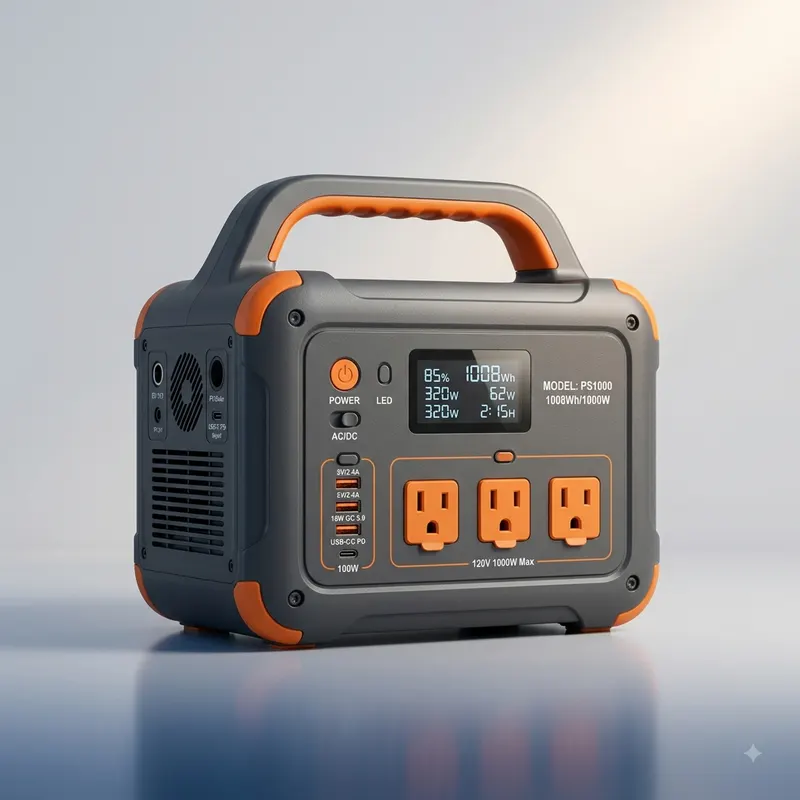
The sweet spot for most Florida homes: runs a fridge in bursts, fans, phones, and lights through a typical outage night. Section image is an illustrative render — tap any button for real product photos on Amazon.
Best overall
EcoFlow DELTA 3 Plus
1024 Wh1800 W~56 min fast charge$$ · mid-range
- Extremely fast AC recharge
- LFP battery (3,000+ cycles)
- Expandable with extra batteries
- Heavier than budget picks
Runner-up
Anker SOLIX C1000 Gen 2
1024 Wh2000 WLiFePO4$$ · mid-range
- Highest surge output in class
- Frequent deep discounts
- App occasionally flaky per owner reviews
Big Home Backup — 2kWh+
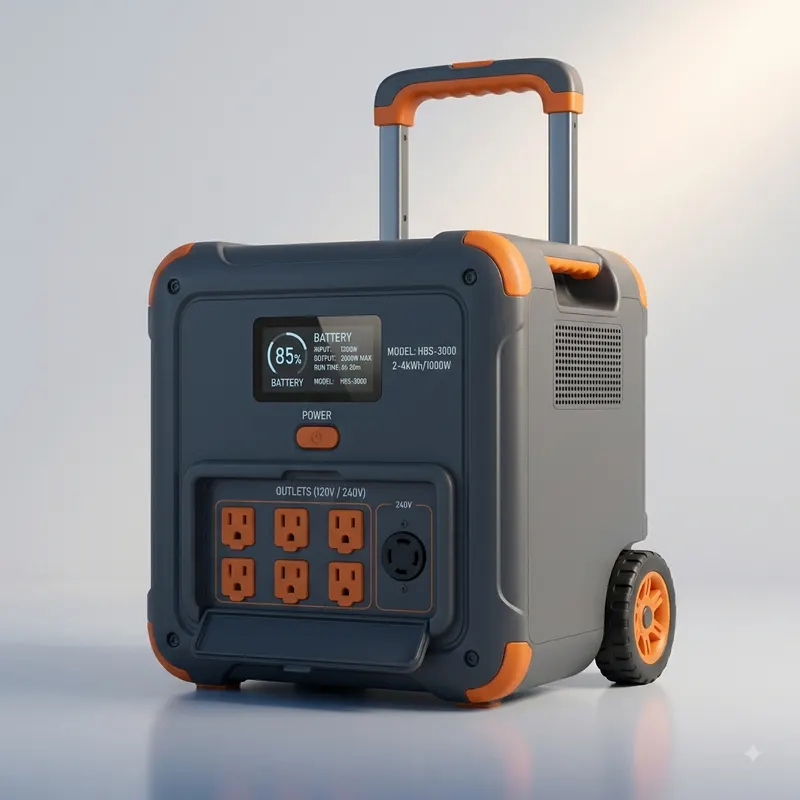
For multi-day outages: fridge continuously, medical devices, a window AC in bursts. Section image is an illustrative render — tap any button for real product photos on Amazon.
Multi-day home backup
Anker SOLIX C2000 Gen 2
2048Wh LiFePO42400W AC / 4000W peakFull recharge in 58 min$$ · mid-range
- Same 2048Wh capacity and 2400W output as the discontinued F2000
- LiFePO4 rated for thousands of cycles
- Roughly 60 lb — not realistically carried far by one person
- Costs more than the F2000 did at clearance
Whole-home tier
EcoFlow DELTA Pro 3
4096 Wh4000 W120/240V$$$ · premium
- Can back critical circuits via transfer switch
- Huge expansion ecosystem
- Serious investment
- 115 lb
Runtime doubler
EcoFlow DELTA 2 Max Extra Battery
2048 WhLiFePO4Pairs w/ DELTA 2/Max$$ · mid-range
- Doubles runtime without a second full unit
- Charges alongside the main unit
- Only works with compatible EcoFlow models
- Ships on a 5–6 week lead time — not a pre-storm purchase
Popular in FL
Anker SOLIX S2000
2010 Wh1500 W (3000 W peak)~36 lb$$ · mid-range
- Best value per Wh in the Anker lineup
- ~35-hr fridge backup claim, often 50% off
- 1500W cont. output — not for big appliances
Popular in FL
Anker SOLIX F2600
2560 Wh2400 W (3600 W peak)~62 lb$$ · mid-range
- Runs fridge + essentials for days
- Expandable, TT-30 RV outlet
- Heavy for evacuation
Budget Picks — Under $250
First power station? Start here: phones, fans, router, CPAP for a night. Section image is an illustrative render — tap any button for real product photos on Amazon.
Entry level
Jackery Explorer 300 (292Wh)
292Wh LiFePO4Pure sine wave AC outlet, 300W classSolar chargeable (panel sold separately)$ · budget
- Real AC outlet at an entry-level price
- LiFePO4 chemistry, unusual in this price class
- 300W output will not start a full-size refrigerator
- Successor to the discontinued Explorer 300 Plus, not the identical unit
Desk defender
APC Back-UPS 850VA (BE850G2)
850 VA / 450 W~35 min runtime$ · budget
- Router + PC ride through flickers
- Set-and-forget
- Not a portable power source
Lightest option
Anker SOLIX C300 DC
288Wh LiFePO4300W total DC outputUSB-C / DC ports only$ · budget
- Compact and light for USB-C laptops and phones
- LiFePO4 chemistry at an entry price
- No AC outlet at all — cannot run anything with a wall plug
- Wall charger not included
Solar Panels
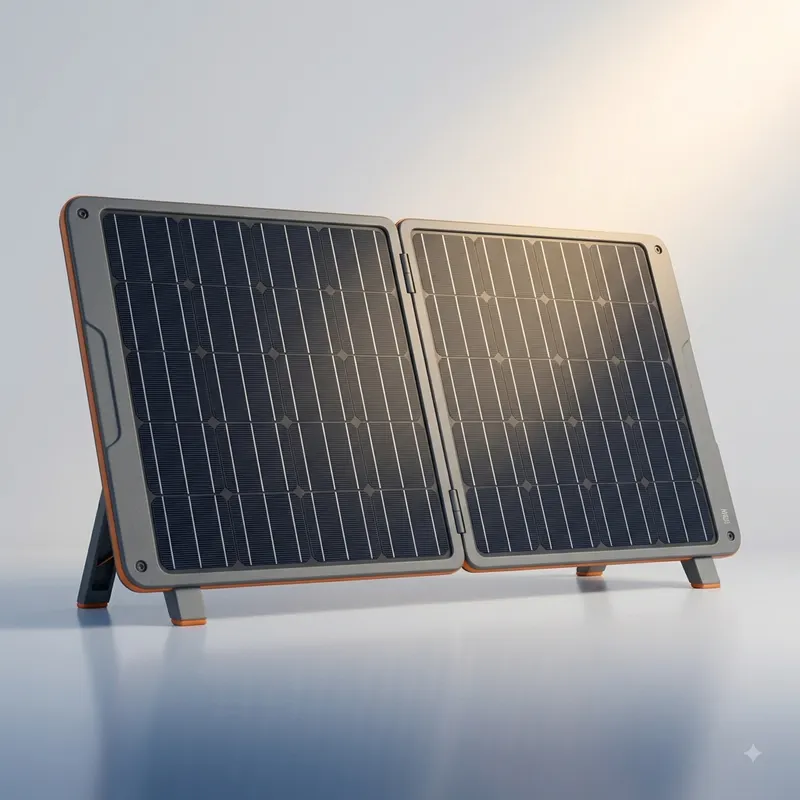
Recharge for free when the grid is down — Florida's one renewable superpower after a storm. Section image is an illustrative render — tap any button for real product photos on Amazon.
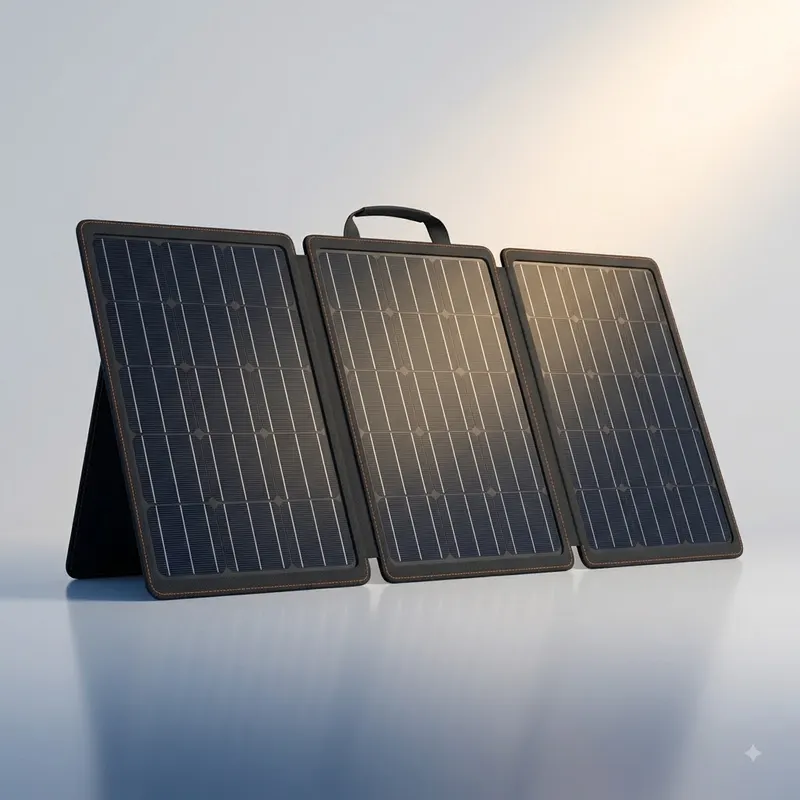 Ultralight
Jackery SolarSaga 100W Light
100W rated, bifacial25% cell conversion efficiency4.52 lb · IP68$ · budget
- Successor to the 100W Air, keeps the sub-5 lb weight
- IP68 rating suits permanent RV or balcony mounting
- Roughly double the price of generic 100W folding panels
- No integrated kickstand — mounting hardware is on the buyer
Best portable
Renogy 200W Portable Foldable
200 WFoldable + kickstand$ · budget
- Meaningful recharge for 1–2kWh stations
- Solid build
- Bulky folded
Best permanent
Renogy 200W Rigid N-Type Panel
200W rigid, N-type 16BB25% cell efficiencyIP67 · 12V/24V$ · budget
- Cheapest $/watt here
- Roof/shed/RV mount
- Needs mounting hardware
Budget solar
TWELSEAVAN 100W Portable Solar Panel
100W monocrystalline24% cell efficiency9.3 lb · IP65$ · budget
- MC4, USB-C 60W and QC3.0 outputs work with most brands without adapters
- Lowest cost per watt of the panels we track
- IP65 — splash resistant, not for sustained heavy rain
- 10W lower rated output than the panel it replaces
Fridges, CPAP & Essentials
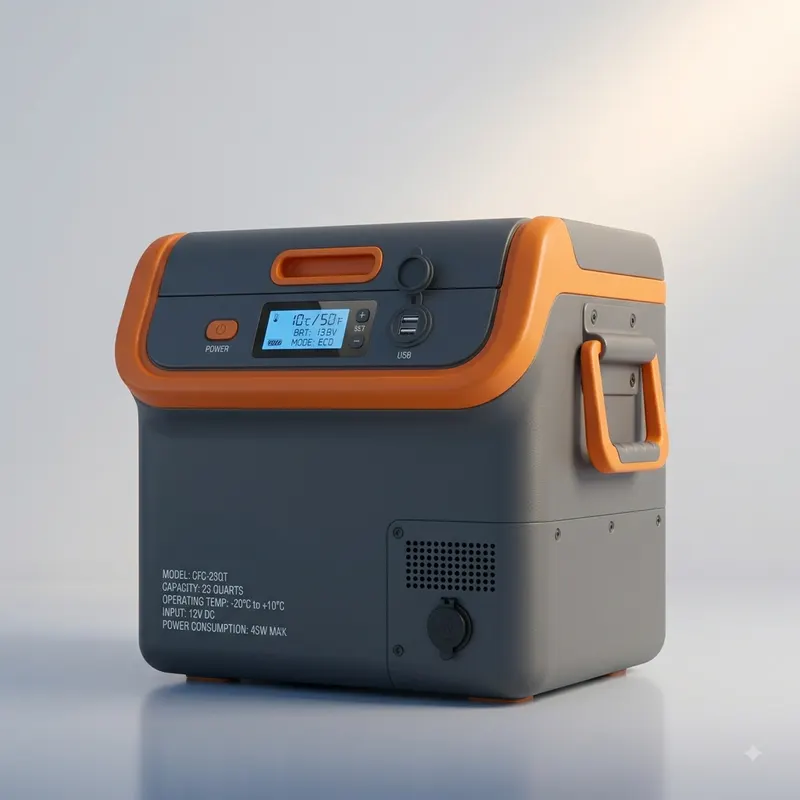
The gear that protects food, meds, and sleep when the AC hum stops. Section image is an illustrative render — tap any button for real product photos on Amazon.
Cold storage
BougeRV 23QT 12V Fridge
23 QT12V/110V~45W draw$ · budget
- Sips power off a station
- Real freezer temps
- Small capacity — meds & essentials
Sleep saver
BLUETTI X30 CPAP Backup
297 WhCPAP-focused DC output$ · budget
- Built for CPAP runtimes
- Quiet
- Niche use vs general station
Non-negotiable
Kidde 10-Yr CO Detector (C3010D)
10-yr sealed batteryDigital display$ · budget
- Generator safety essential
- Zero maintenance
- Sealed battery is not replaceable — the whole unit is discarded at 10 years
- No digital display of current CO ppm on this model
Outage cooling
EcoFlow WAVE 3 Portable Air Conditioner
6100 BTU cooling (1800W)6800 BTU heating (2000W)1000W charging, full in ~75 min$$ · mid-range
- Higher output than the WAVE 2 it replaces
- Runs off a portable power station during an outage
- This SKU ships without the add-on battery — cordless operation costs considerably more
- 6100 BTU cools one small room, not a house
Hookup & Accessories
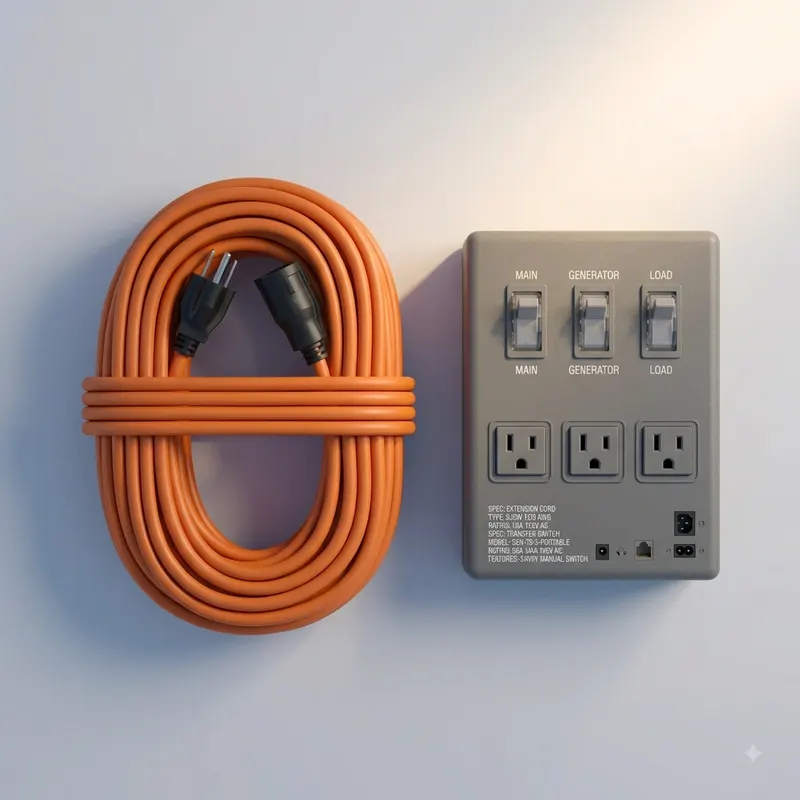
The unglamorous parts that make backup power actually work. Section image is an illustrative render — tap any button for real product photos on Amazon.
Pro hookup
Reliance 31410CRK Transfer Switch Kit
10 circuits30 A$$ · mid-range
- Feeds real house circuits safely
- Electrician-friendly kit
- Install cost extra
Workhorse
Iron Forge 50ft 12/3 Extension Cords (2-pk)
12 AWG50 ft2-pack$ · budget
- Handles heavy loads without voltage sag
- Heavy coil
Capacity doubler
EcoFlow DELTA 3 Extra Battery (1024Wh)
1024 WhLiFePO4Plug-and-play$$ · mid-range
- Doubles a DELTA 3 Plus to 2kWh instantly
- No second inverter to manage
- Only works with the EcoFlow ecosystem
Inverter Generators (Dual-Fuel)
For whole-house-scale loads and multi-day outages - run them OUTSIDE, 20+ feet from any window, with CO alarms inside. Section image is an illustrative render — tap any button for real product photos on Amazon.
CO-sensor safety
ERAYAK 4500W Dual-Fuel Inverter Generator
4500 W peakGas + propaneCO auto-shutoff54 lb$$ · mid-range
- Runs on gas or propane - flexibility when stations run dry
- Built-in CO sensor shuts it down automatically
- 30A RV outlet for transfer-switch hookups
- Still a gas engine - outdoor use only, always
- Low inventory at last check — availability may not hold
Tool-owner pick
DeWalt DCB1800B Power Station
1800 W cont.3600 W peakRuns on 4x 20V packs$$ · mid-range
- Doubles as jobsite battery charger
- Rugged build
- No internal battery — needs DeWalt packs
- No Amazon-fulfilled stock; third-party seller with multi-week delivery
Comfort & Alerts: Fans, Lights, Weather Radio
The gear that makes day 3 without AC bearable - and keeps official storm alerts coming when cell towers wobble. Section image is an illustrative render — tap any button for real product photos on Amazon.
Best value fan
20000mAh Rechargeable Camping Fan with LED Lantern
20000mAh, 10–30 h runtime by speed4 speeds, brushless motor at 30 dB or less270° manual swivel head + 3-level lantern$ · budget
- Nearly 7,000 reviews at 4.4 stars
- 3–5 hour USB-C recharge
- Manual head rotation only — no auto oscillation or remote
- 20,000mAh, not the 40,000mAh some listings in this class claim
Popular pick
Midland WR400 NOAA Weather Radio
80+ voice alertsAuto-scanBattery backup$ · budget
- Wakes you for warnings even asleep
- Works when cell alerts fail
- Alarm is aggressively loud (by design)
Most-reviewed lantern
Lepro 1000LM Rechargeable Camping Lantern
1000 lumens, 360° beam4400mAh, doubles as a USB power bank6.5 h at full output, 12 h at 300 lm$ · budget
- 33,000+ reviews at 4.6 stars
- Charges a phone in an outage
- IPX4 only — splash resistant, not rain-proof
- Full 1000 lm output cuts runtime to about 6.5 hours
One per room
LETMY Rechargeable Camping Lanterns (4-pack)
4-pack, 600 lumens eachThree power paths: rechargeable, solar, or 3× AA12+ hours runtime, collapsible$ · budget
- Triple power source works when there is nothing left to charge from
- Four units covers a whole house, one per room
- Solar panel is a trickle top-up, not a practical full recharge
- Dimmer than a single premium lantern
- AA cells not included
Inverter Generators — Quiet Gas Backup
When outages stretch past what batteries hold: quiet inverter generators for fridge and AC duty. OUTDOORS ONLY, 20+ feet from the house, with a working CO detector — always. Section image is an illustrative render — tap any button for real product photos on Amazon.
Gold standard
Honda EU2200i Inverter Generator
2200 W peak1800 W rated48–57 dB~8 hr runtime$$$ · premium
- Legendary reliability and quiet operation
- Runs fridge + CPAP through multi-day outages
- Premium price
- Gasoline logistics in storms
Quiet gas backup
Westinghouse 2550W Dual-Fuel Inverter Generator
2550 peak / 1900 rated WDual fuel, up to 11 h at 25% load42 lb · 52 dBA · CO shutoff sensor$$ · mid-range
- Successor to the iGen2200 with propane capability and a CO shutoff sensor
- RV-ready 30A outlet and parallel capable
- Recoil start only — no electric start
- 4.3-star average, below the unit it replaces
- Costs a bit more than the old iGen2200 it replaces
Cooling, Light & Comfort
Florida outages are a heat problem. Fans, light, and phone power that run for days on batteries. Section image is an illustrative render — tap any button for real product photos on Amazon.
Longest fan runtime
Odoland 40000mAh Oscillating Camping Fan
40000mAh, 22–61 h runtime by speedAuto oscillation + remote to 16 ftBuilt-in LED lantern, reverse USB charging$ · budget
- Runs while charging and can reverse-charge a phone
- True auto oscillation, not a fixed head
- 16-hour full recharge is slow
- 609 reviews is a modest base
- Roughly double the price of a 20,000mAh fan
Alerts, Car Power & Home Protection
The gear that keeps you informed, mobile, and protected when the grid flickers back. Section image is an illustrative render — tap any button for real product photos on Amazon.
Storm essential
Midland ER310 Crank Weather Radio
NOAA alertsCrank/solar/batterySOS light$ · budget
- Never dies — three ways to power it
- The category-defining hurricane radio
- Crank charging is slow for phones
Car power
BESTEK 300W Car Power Inverter
300W continuous / 700W peakTwo AC outlets + two 4.8A USBETL certified, 40A fuse$ · budget
- 33,900+ reviews at 4.5 stars
- Turns any car into a charging station
- Modified sine wave — some electronics and motors run poorly on it
- Cigarette-lighter wiring limits real draw to about 150W
- Fan is audible above roughly 70W
Evac insurance
NOCO Boost GB40 Jump Starter
1000 AUSB power bankSpark-proof$ · budget
- Keeps the evacuation vehicle starting
- Doubles as a phone bank
- Won't run appliances
Panel guard
Square D HEPD80 Whole-House Surge Protector
80 kA120/240 VPanel-mount$ · budget
- Protects everything when power snaps back after a storm
- Electrician install required
Power Station Quick Compare — August 2026
Questions Florida homeowners ask
What size power station do I need to run a refrigerator?
Plan on 1000Wh or more. A typical full-size Florida refrigerator draws 100-200 watts while the compressor cycles, averaging roughly 1000-1500 watt-hours per day, and it can surge to 800-1200 watts at startup. A 1024Wh unit with 1800W output, like the EcoFlow DELTA 3 Plus, runs a fridge about 18-24 hours if nothing else is plugged in.
How long will a 1024Wh power station last?
Divide 1024 by the device's wattage, then subtract about 10-15 percent for inverter losses. A 60W fan runs roughly 15 hours, a 10W wifi router about 85 hours, a 40W CPAP without humidifier around 20 hours, and a 5W phone charge takes maybe 15Wh, so 1024Wh covers dozens of recharges. A cycling refrigerator drains it in roughly 18-24 hours.
Generator or battery power station for hurricane backup?
Batteries win indoors, generators win for long outages. A portable power station runs silently inside with zero exhaust and handles a fridge plus devices for about a day per 1000Wh. A dual-fuel generator makes 3000-7000 watts indefinitely on fuel, but must stay outdoors, 20 feet from the house. Many Florida homeowners keep a battery for nights and a generator for daytime recharging.
Can I run an air conditioner on a portable power station?
Only a small one, and not for long. A 5,000-8,000 BTU window AC draws 450-700 watts running and surges past 1200 watts on startup, so it needs a 1800W-or-higher inverter. A 1024Wh unit gives roughly 1.5-2 hours. Central AC needs 3500-6000 running watts and 240V, which requires something like a 4096Wh EcoFlow DELTA Pro 3 plus a transfer switch.
What size battery runs a CPAP machine overnight?
About 300-500Wh covers one night. A CPAP without a heated humidifier draws roughly 30-60 watts, or 240-480 watt-hours over eight hours. Turning off the humidifier and heated hose can cut consumption by more than half. A 288Wh Jackery Explorer 300 handles one humidifier-free night; a 1024Wh unit covers two to three nights, or one night with humidification.
Can I recharge a power station with solar during an outage?
Yes, and it is the only refill option once the grid and gas stations are down. A 200W portable panel in good Florida sun produces roughly 120-160 watts real-world, so a 1024Wh station takes about 7-9 hours of daylight, often spread over two days. Two 220W panels cut that to roughly 3-4 hours. Confirm the station's solar input voltage limit first.
Is it safe to run a generator in my garage?
No. Never run a generator in a garage, carport, shed, porch, or crawlspace, even with the door open. Gasoline generators emit carbon monoxide that can reach lethal levels within minutes and CO is odorless and invisible. Place the generator outdoors at least 20 feet from the house with the exhaust pointed away from doors, windows, and vents, and install battery-powered CO alarms indoors.
How long do LiFePO4 power station batteries last?
About 10 years of realistic use. Lithium iron phosphate cells in current units are rated for roughly 3,000-4,000 full charge cycles before dropping to 80 percent of original capacity. Since most hurricane-backup owners cycle a station only a handful of times a year plus occasional camping, calendar aging usually matters more than cycles. Store at 50-80 percent charge and top it off every three to six months.
What is a transfer switch and do I need one?
A transfer switch is a licensed-electrician-installed device that safely connects a generator or large battery to a home's circuit panel, isolating the house from the utility line. It prevents backfeed, which can electrocute line workers and is illegal in Florida without one. Small power stations plugged into directly do not need a transfer switch; anything wired to household circuits does.
Can I take a portable power station on a plane?
No. Airlines cap lithium batteries at 100Wh in carry-on, and up to 160Wh with airline approval, while power stations start around 288Wh and run past 4000Wh. They are banned from both carry-on and checked baggage. For a Florida hurricane evacuation, plan to drive the unit out in your car, where it can also recharge from a 12V or alternator charging port.
How do I keep a refrigerator cold without power?
Keep the door shut. An unopened refrigerator stays safe roughly 4 hours and a full freezer about 48 hours (24 hours if half full), per USDA guidance. Freeze jugs of water and gallon bags of ice beforehand and move them into the fridge compartment. Keep an appliance thermometer inside; discard perishable food that sits above 40°F for over 2 hours.
Do solar panels work on cloudy days?
Yes, but output falls sharply. Portable solar panels typically produce 10-25 percent of rated wattage under heavy overcast, so a 200W panel might deliver 20-50 watts during a Florida storm band, and near zero in downpours. Clear post-hurricane skies are common, which is when most charging happens. Size for the clear days and treat cloudy output as a slow trickle, not a plan.
Can I get a power station delivered before a hurricane?
Only if you order early. Amazon Prime two-day and same-day shipping usually still runs several days ahead of a Florida landfall, but demand spikes and carriers suspend deliveries in the cone once tropical-storm-force winds arrive, often 24-48 hours before. Buy at the start of hurricane season in June rather than during a watch, when stock sells out and prices firm up.
What wattage does a wifi router need?
Very little. A home wifi router draws roughly 6-12 watts, and a cable or fiber modem adds another 5-10 watts, so the pair typically needs 15-20 watts total. A 288Wh power station keeps them running about 14-18 hours, and a 1024Wh unit for two to three days. Note that internet service itself often fails during an outage regardless of your router.
What changed on this page
- 2026-09-04 — Switched all displayed prices to $/$$/$$$ ballpark tiers (budget / mid-range / premium). Dollar bands are retained as internal data for drift checks only, per Amazon Associates price-display rules.
- 2026-08-19 — Published the methodology page; added the badge system, price-context buttons and runtime chart.
- 2026-08-16 — Q&A expanded to 100 questions from a study of how Floridians phrase these questions to AI assistants.
- 2026-08-15 — Full audit against live listings: replaced 13 unavailable products (SOLIX F2000 → C2000 Gen 2, Explorer 300 Plus → Explorer 300, SolarSaga 100W Air → 100W Light, WAVE 2 → WAVE 3, iGen2200 → Westinghouse 2550W dual-fuel, and all lanterns/fans), corrected two wrong-product listings, and re-verified all 22 price bands.
- 2026-08-14 — Added four products trending in Florida searches; verified each listing by hand.
▲ Fast shipping before a storm
Tracking a system in the Gulf? A freeAmazon Prime trialgets most of this gear to your door in 1–2 days (paid link). Order before the cone tightens — carriers pause deliveries once watches become warnings.
How we pick: research-based selection from manufacturer specifications, verified owner reviews, and observed street pricing, curated by Hilario Herrera. We have not lab-tested these units; runtime figures use the standard formula (rated Wh × 0.85 inverter efficiency ÷ load watts). Picks favor LiFePO4 chemistry and products with strong availability during Florida hurricane season. Prices shown are typical bands and change often; the button shows the live price. Last reviewed August 14, 2026.