How to Keep Your CPAP Running During a Florida Power Outage
By Hilario Herrera · Last updated ·Research-based guide · Some links are paid links (disclosure).
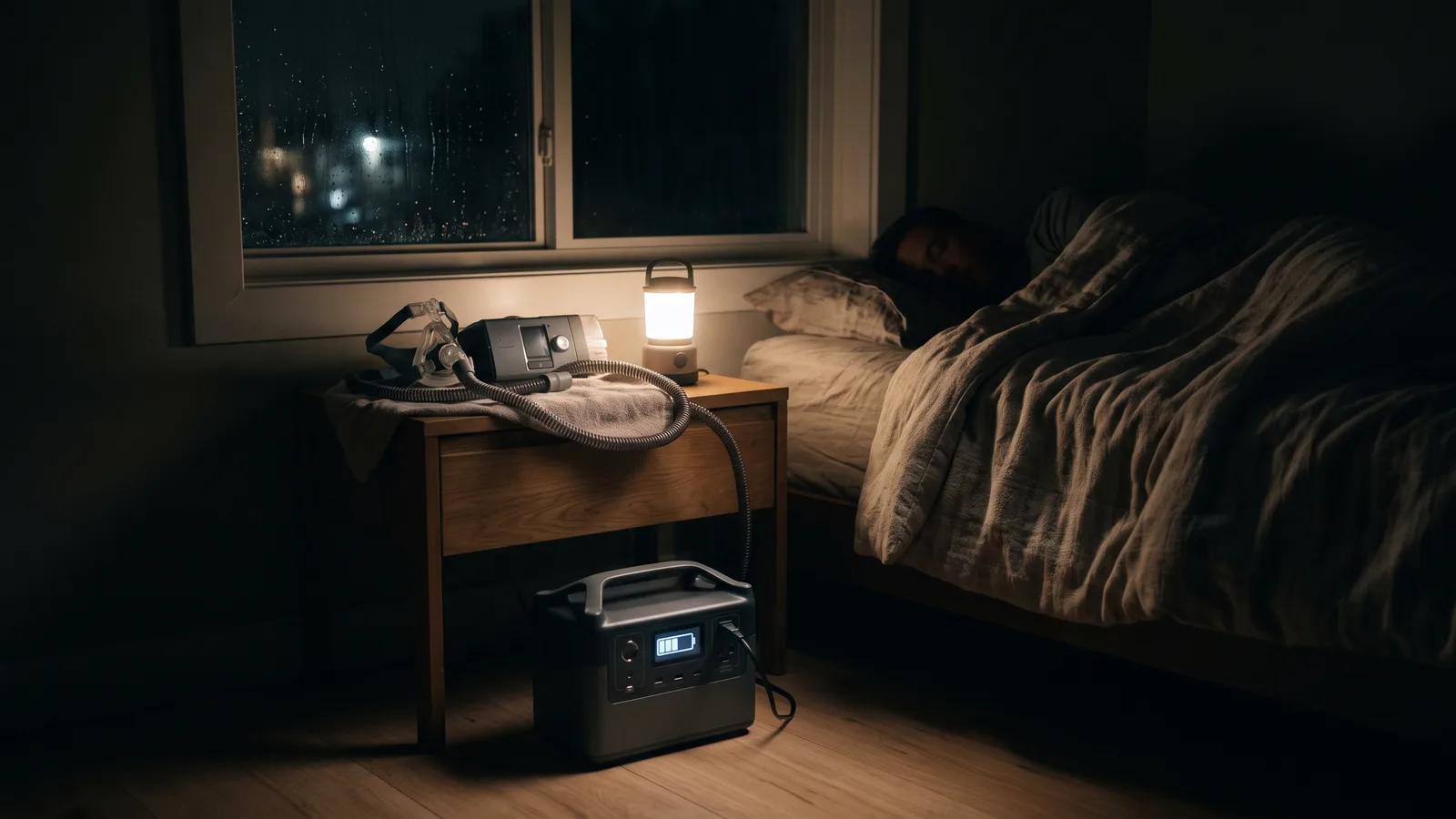
If you rely on a CPAP or BiPAP machine for sleep apnea, a hurricane-season power outage isn’t just an inconvenience — it can mean a night without therapy. The good news is that CPAP machines draw relatively little power compared to appliances like refrigerators or AC units, which makes them one of the easiest medical devices to keep running on battery backup. This guide covers your options. It is not medical advice — always confirm compatibility with your CPAP manufacturer and consult your doctor or durable medical equipment (DME) provider about backup plans for your specific device and health needs.
Quick picks
- Best small dedicated CPAP battery: Jackery Explorer 300
- Best all-purpose power station (CPAP + phone + lights): Anker SOLIX C300
- Best for multi-night outages: EcoFlow River 3 Plus
- Manufacturer-specific option: ResMed AirMini battery packs
How much power does a CPAP actually use
Most CPAP machines draw surprisingly little energy. According to manufacturer specifications, a typical CPAP without a heated humidifier draws around 30-60 watts continuously while running. Turning on a heated humidifier roughly doubles that draw, and heated tubing adds more on top of it. Over an 8-hour night, a humidifier-free CPAP might use only 240-480 watt-hours total — well within reach of even a small portable power station.
| Setup | Approx. Watts | Approx. Wh per 8-hr night |
|---|---|---|
| CPAP, no humidifier | 30–60W | 240–480Wh |
| CPAP with heated humidifier | 60–90W | 480–720Wh |
| CPAP with heated humidifier + heated tubing | 70–110W | 560–880Wh |
Check the label on your specific machine or its user manual for exact wattage — devices vary by brand and model (ResMed AirSense, Philips DreamStation, and others each have their own published specs).
Power station options
A general-purpose power station with at least one AC (wall-outlet-style) port is the simplest option. Plug your CPAP’s standard power supply directly in, exactly as you would at home. Look for:
- Pure sine wave output — most CPAP manufacturers specify this is required for safe, proper operation; check your machine’s manual.
- At least 300Wh capacity for a single night without humidifier; 500Wh+ if you use a heated humidifier or want a safety margin.
- Quiet operation — battery power stations run silently, unlike gas generators, which matters for bedside use.
A unit like the Jackery Explorer 300 or EcoFlow River 3 Plus can typically power a humidifier-free CPAP for 1-2 nights per charge, based on their published watt-hour capacity. Larger units such as the Anker SOLIX C300 add headroom for a humidifier and leave capacity for charging phones or running a small fan.
Manufacturer and DME-provided options
Some CPAP manufacturers sell dedicated battery packs designed specifically for their machines (for example, ResMed’s battery accessories for the AirMini and AirSense lines). These are purpose-built, typically lighter and more portable than a general power station, but usually offer less runtime and cost more per watt-hour. Your DME provider or CPAP manufacturer’s website is the best source to confirm which battery accessories are certified compatible with your exact model — using an uncertified adapter or battery can affect warranty coverage or device performance.
Recharging during a multi-day outage
For outages longer than a night or two, plan a recharging strategy:
- Solar panels — many power stations (EcoFlow, Jackery, Anker) accept portable solar panel add-ons, letting you recharge during the day for use that night.
- Car charging — most power stations can recharge from a vehicle’s 12V outlet while you run errands or charge phones.
- Generator charging — if you also own a portable generator, most power stations can recharge from its AC output faster than from solar or a car.
Safety notes
- Never run a gas or propane generator indoors, in a garage, or under a covered porch, even with doors and windows open. Generator exhaust contains carbon monoxide, which is invisible, odorless, and can be fatal within minutes. The CDC and CPSC recommend generators run outdoors, at least 20 feet from windows, doors, and vents.
- Keep a battery-powered or battery-backup carbon monoxide detector in your home, especially during hurricane season when generator use rises.
- If you use supplemental oxygen alongside your CPAP, follow your oxygen equipment manufacturer’s specific power backup and safety guidance, and talk to your doctor about outage contingency plans.
- If you have severe sleep apnea or other health conditions where even one night without therapy is a serious concern, discuss a backup power plan with your physician or DME provider well before hurricane season, not during an active storm.
FAQ
Will a power surge from an outage damage my CPAP? Most modern CPAPs have built-in power supplies that handle normal voltage fluctuations, but a surge protector between the power station and machine is a low-cost extra precaution.
Can I use a car battery or jump-starter pack instead of a power station? Some CPAP machines offer DC (12V) cables that connect directly to a car battery or compatible jump-starter, bypassing the inverter entirely, which can be more power-efficient. Check whether your specific model supports a DC cable — this varies by manufacturer.
How many nights can I get from a single power station charge? Depends on capacity and whether you use a humidifier. A 300Wh unit without humidifier may last 1 night; a 1,000Wh+ unit could stretch to 2-3 nights of humidifier-free use. Always test your setup before an outage to know your real-world runtime.
Is it safe to run my CPAP on a power station every night as a backup habit? Power stations are designed for occasional backup use. For nightly, everyday use, a wall outlet remains the standard and most reliable option; reserve battery power for outages.
What if my CPAP requires distilled water for the humidifier and I run out during a long outage? Running the humidifier without water, or switching to humidifier-free mode temporarily, is generally acceptable for short periods, but confirm with your CPAP manufacturer’s guidance or your doctor if you’re uncertain about running without humidification for multiple nights.