Insulin Storage During a Power Outage: What the FDA Actually Says
By Hilario Herrera · Last updated ·Research-based guide · Some links are paid links (disclosure).
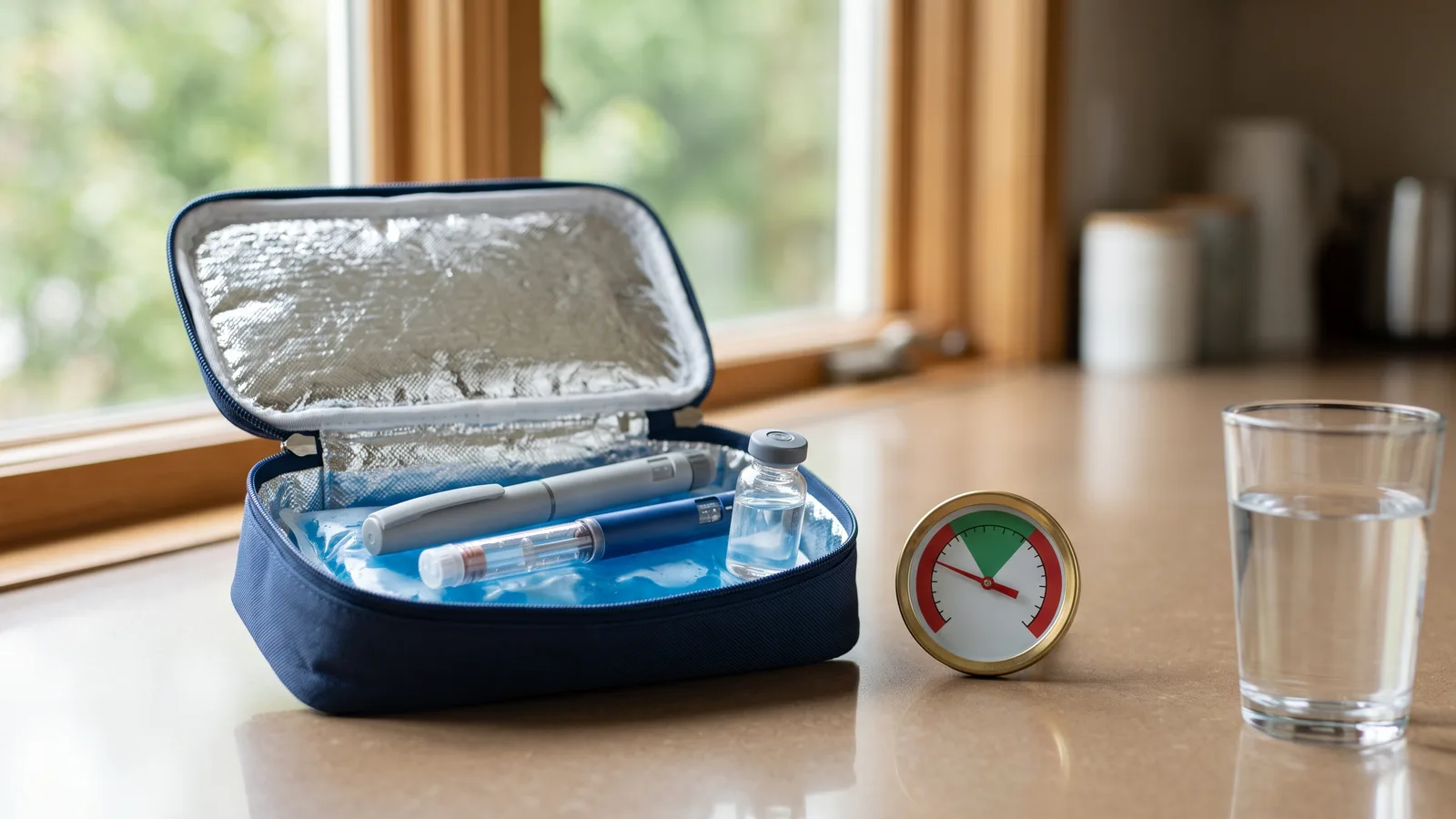
Quick answer: Unopened insulin stored at room temperature — not above 86°F (30°C) — is generally usable for about 28 days, after which it should be discarded. Insulin in use follows the same 28-day room-temperature window for most products. The hard limit is heat: insulin that has been exposed to temperatures above 86°F, or that has ever frozen, should not be used. (FDA guidance on insulin storage in emergencies)
In Florida, that 86°F ceiling is the entire problem. A house without air conditioning in August routinely reaches 88–95°F within hours. The refrigerator failing is not the emergency — the house heating up is.
This is preparedness information, not medical advice. Always follow your insulin’s package insert and your care team’s direction. During a declared emergency, contact your pharmacist about replacement supply.
The three numbers that matter
| Condition | Guidance |
|---|---|
| Refrigerated, 36–46°F | Good until the printed expiration date |
| Room temperature, below 86°F | ~28 days, then discard |
| Above 86°F, or frozen at any point | Do not use — potency may be reduced |
Two additional cautions the FDA emphasizes: insulin exposed to conditions outside these ranges should be replaced as soon as possible, and if you must use insulin that was stored improperly because you have no alternative, monitor blood glucose closely and watch for unexplained highs, which can signal reduced potency.
Why a cooler with ice is the wrong first answer
The instinct is to put insulin on ice. This is a real risk: insulin that freezes is ruined, and direct contact with ice or an ice pack easily drops a vial below freezing. If you use a cooler, the vial must be wrapped and physically separated from the ice — never sitting on it.
The target is 36–46°F. A cooler gives you no way to know whether you are hitting it.
What actually works, in order of reliability
1. A 12V compressor fridge — the best answer. Unlike a cooler, a compressor fridge holds a set temperature, and unlike a thermoelectric cooler it works regardless of how hot the room is. A BougeRV 23QT 12V fridge averages roughly 45W, about 250–400Wh per day (paid link).
That number is the good news: a 1kWh power station runs it for roughly three days with nothing else attached, and a 100W solar panel keeps it running indefinitely.
The verdict: for a Florida household with insulin-dependent members, a 12V compressor fridge on a 1kWh power station is the right buy — it holds a true 36–46°F for about three days on battery alone and runs indefinitely with a single 100W panel — unless you only need short coverage, in which case a rated insulin travel case is far cheaper.
2. A dedicated insulin cooling case. Evaporative (water-activated) cases hold cool for 45 hours or more without any power and cannot freeze the vial — a genuine advantage. Battery-powered medical cooling cases hold a regulated range but need recharging. Either is a strong second layer.
3. Your unpowered refrigerator, door closed. Worth roughly four hours (see the food hold-time guide). Useful as a bridge while you set up something better, not as a plan.
4. A cooler, correctly packed. Insulin wrapped in a towel, in a sealed bag, not touching ice, with a thermometer inside. Acceptable in a pinch. Check the thermometer, not your intuition.
Buy a thermometer — this is the cheap part
Every method above is a guess without a thermometer. A small digital appliance thermometer in your cooling container is the only way to know whether you are inside 36–46°F or have quietly frozen a month of medication. It costs very little and it is the highest-value item in this entire guide.
The power setup that covers it
The medication load is small — it is everything else that sizes the battery. A realistic Florida “medical household” outage kit:
| Load | Daily consumption |
|---|---|
| 12V fridge for insulin | 250–400Wh |
| CPAP, humidifier off | 240–320Wh |
| Phone charging + a fan | 150–250Wh |
| Total | ~650–1,000Wh/day |
That points squarely at a 1kWh station plus solar, or a 2kWh station for margin:
- EcoFlow DELTA 3 Plus — 1024Wh, roughly one full day of the load above (paid link)
- Anker SOLIX F2600 — 2560Wh, roughly 2.5 days with no sun (paid link)
- Renogy 200W portable panel — roughly 800–1,000Wh per clear Florida day, which covers the entire load (paid link)
Before the storm
- Refill early. Florida law allows early emergency refills when a state of emergency is declared in your county — call your pharmacy as soon as a watch is issued, not after.
- Keep insulin in original packaging with the expiration date visible.
- Photograph your prescriptions — names, doses, prescriber. This is what a shelter or replacement pharmacy will ask for.
- Write the date on any vial that leaves refrigeration, so you know where you are in the 28-day window.
- Pre-freeze the 12V fridge or gel packs while you still have grid power.
- Register with your county’s Special Needs Registry — special-needs shelters have powered refrigeration.
Frequently asked questions
Can I use insulin that got warm? Insulin exposed above 86°F should be replaced as soon as possible. If you have no alternative and must use it, monitor blood glucose closely — reduced potency shows up as unexplained high readings. Contact your pharmacist about a replacement supply immediately.
Does insulin go bad faster once opened? Most in-use insulin follows a 28-day room-temperature window, but this varies by product. Check your specific package insert — some pens and products have shorter in-use windows.
Is a thermoelectric (Peltier) cooler good enough? Not in a Florida outage. Thermoelectric coolers only cool a fixed number of degrees below ambient. In a 90°F house, they may never reach the 36–46°F range. Use a compressor fridge instead.
How long can a power station keep a 12V fridge going? At about 45W average, roughly 1.5 days per 1,000Wh of usable capacity. A 1024Wh station gives you around three days, since the fridge cycles rather than running continuously.