7 Generator Safety Mistakes Florida Homeowners Make During Hurricanes
By Hilario Herrera · Last updated ·Research-based guide · Some links are paid links (disclosure).
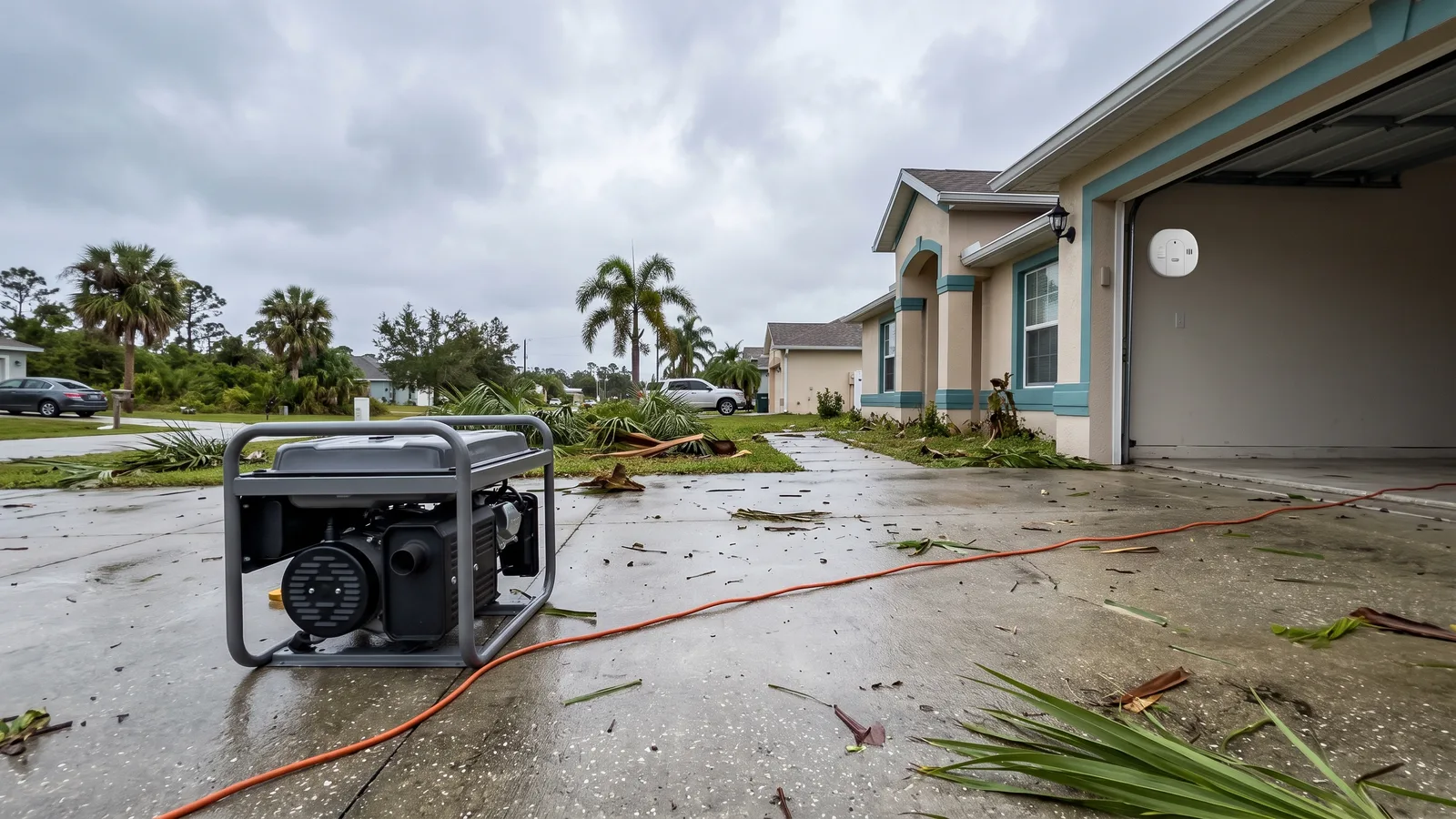
Every hurricane season, emergency rooms across Florida see a predictable spike in carbon monoxide poisoning and electrical injury cases tied to generator misuse — most of them preventable. The Consumer Product Safety Commission (CPSC) and CDC have tracked this pattern for years: generator-related carbon monoxide deaths cluster tightly around major storm outages. Here are the mistakes that cause the most harm, and how to avoid them. This is general safety information, not a substitute for your generator’s owner’s manual or local electrical code requirements.
Quick picks
- CO detector (battery-backup, essential with any generator): Kidde Battery-Operated CO Detector
- Heavy-duty outdoor-rated extension cord: 12/3 Gauge Outdoor Extension Cord
- Manual transfer switch kit: Reliance Controls Transfer Switch
- Portable generator with CO shutoff sensor: Champion 4500W with CO Shield
Mistake 1: Running the generator indoors, in a garage, or under a porch
This is the single biggest killer. Carbon monoxide is colorless and odorless, and it can build to lethal levels in an attached garage, breezeway, or covered porch within minutes — even with the garage door open. The CDC and CPSC guidance is unambiguous: run portable generators outdoors only, at least 20 feet from windows, doors, and vents, with the exhaust pointed away from the house. Many newer generator models now include a built-in CO sensor that automatically shuts the unit down if CO levels rise nearby — worth prioritizing if you’re buying new, but not a substitute for correct placement.
Mistake 2: No carbon monoxide detector inside the home
Even with a generator placed correctly outside, wind direction, nearby structures, or a neighbor’s generator can push CO indoors. A battery-powered or battery-backup CO detector (so it still works if grid power is out) is inexpensive insurance. Place one on each level of the home, especially near sleeping areas, and check batteries before hurricane season starts.
Mistake 3: Backfeeding power into the house wiring
Some homeowners run a cable from the generator directly into a dryer outlet or similar to power the whole house through the panel — a practice known as backfeeding. This is dangerous for two reasons: it can energize the utility lines outside your home, which can electrocute utility workers restoring power on the line (even blocks away), and it bypasses your home’s circuit protection, risking fire. The safe alternative is a properly installed transfer switch (manual or automatic), which physically disconnects your home from the grid before connecting the generator. This typically requires a licensed electrician and, in most Florida counties, a permit.
Mistake 4: Refueling a hot generator
Gasoline vapor can ignite on contact with a hot engine or muffler. Every generator manufacturer’s manual specifies shutting the unit down and letting it cool for several minutes before refueling. Keep a fire extinguisher rated for fuel fires nearby, and never refuel near an open flame or while smoking.
Mistake 5: Using indoor-rated or damaged extension cords
Standard indoor extension cords aren’t built for outdoor moisture or the current draw of appliances like refrigerators and window AC units. Use heavy-gauge (12 or 10 AWG), outdoor-rated cords, and inspect them for cracks or exposed wire before each use. Overloaded or damaged cords are a common cause of house fires during extended generator use.
Mistake 6: Operating a generator in the rain or standing water
Florida hurricanes bring exactly the conditions that make this dangerous — heavy rain and flooding. Generators are electrical equipment and can short out, shock the operator, or start a fire if exposed to standing water. Most manufacturers sell generator tents or covers specifically rated for running units safely in wet weather; if you don’t have one, wait for a lull in the rain and keep the unit elevated above any standing water, on dry, stable ground.
Mistake 7: Oversizing or undersizing the load without checking startup watts
Plugging in more appliances than the generator can handle causes it to overload, trip breakers repeatedly, or run appliances on unstable power that can damage their electronics. The mistake isn’t just about total wattage — it’s forgetting that compressor-driven appliances (refrigerators, AC units, well pumps) draw a large surge on startup, sometimes 2-3x their running wattage. Add up your critical appliances’ running watts, then check that the generator’s surge rating comfortably covers the highest single startup spike on top of everything else already running.
A basic pre-storm generator safety checklist
- Test-run the generator before hurricane season, not during an active storm
- Confirm you have fresh, stabilized fuel (or a full propane tank) and know your local fuel storage limits
- Place fresh batteries in all CO detectors
- Identify an outdoor spot at least 20 feet from the house, protected from flooding, for generator placement
- Confirm your transfer switch (if installed) is functioning, or plan cord routing safely through a window/door gap kit rather than a cracked-open door
- Keep the owner’s manual accessible for your specific model’s fuel, maintenance, and safety specs
FAQ
How far from the house does a generator really need to be? The CPSC and CDC recommend at least 20 feet from windows, doors, and vents, with the exhaust directed away from the home. Corners and covered areas can trap fumes even beyond that distance, so more clearance is safer when possible.
Can I run a generator under a tarp or canopy if it’s raining? Only if the cover is specifically designed and rated for generator use (a “generator tent” with adequate ventilation) — improvised tarps can trap exhaust or restrict airflow, creating both a CO risk and an overheating risk. Follow your generator manufacturer’s specific wet-weather guidance.
Is it safe to run a generator overnight while everyone is asleep? Yes, if it’s placed correctly outdoors with working CO detectors inside, but many people prefer to shut it off overnight to conserve fuel and reduce risk, switching to a battery power station for essentials like a CPAP machine or phone charging instead.
What’s the difference between a manual and automatic transfer switch? A manual transfer switch requires you to flip switches to disconnect from the grid and connect the generator; an automatic transfer switch (standard with whole-house standby generators) does this instantly and automatically when it senses an outage. Both prevent backfeeding when installed correctly by a licensed electrician.
Do carbon monoxide symptoms show up immediately? Early symptoms — headache, dizziness, nausea, confusion — can appear within minutes of exposure to high CO concentrations and are easy to mistake for fatigue or heat exhaustion during a stressful storm. If anyone in the home shows these symptoms while a generator is running nearby, move to fresh air immediately and seek medical attention.