EcoFlow vs. Jackery vs. Anker Solix (2026): Which Power Station Brand Wins?
By Hilario Herrera · Last updated ·Research-based guide · Some links are paid links (disclosure).
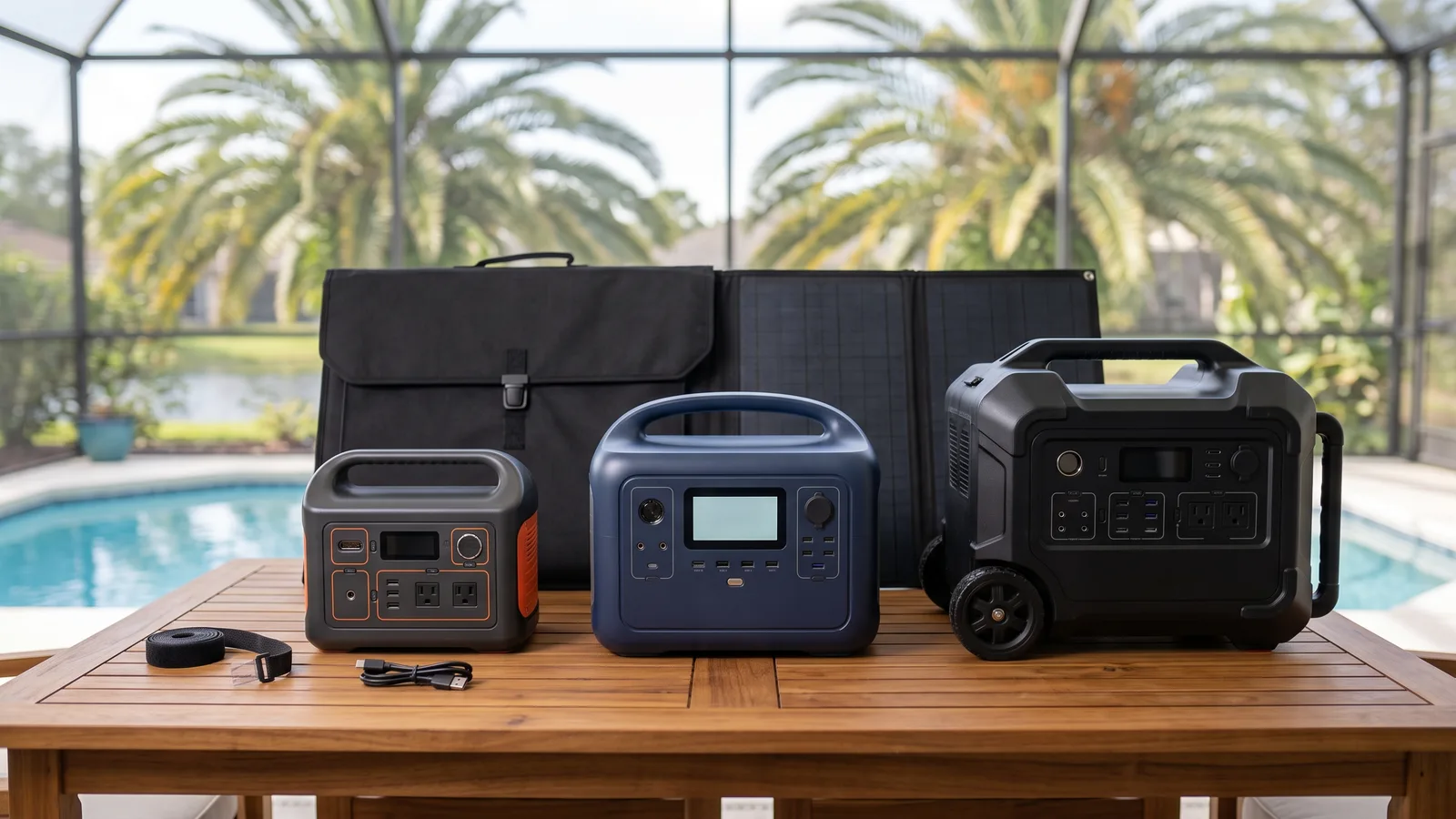
If you’ve started shopping for a home backup battery, you’ve probably noticed the same three names everywhere: EcoFlow, Jackery, and Anker Solix. All three make solid LiFePO4 (lithium iron phosphate) power stations, and all three now sell nearly identical capacity tiers, which makes picking one confusing. This guide breaks down the current 2026 lineups by capacity class so you can match a unit to what you actually need to run — fridge, fans, CPAP, modem — through a Florida power outage.
We’re not testing units ourselves here. Specs and prices below are pulled from manufacturer listings and cross-checked against current buying-guide roundups; treat listed prices as ballpark, since all three brands run frequent sales, especially around hurricane season.
Quick picks
- Best overall mid-size unit: Anker SOLIX C1000 Gen 2 — fastest charging in its class and a strong app.
- Best for extended outages: EcoFlow DELTA 3 Ultra or Jackery Explorer 3000 v2 — both around 3,000Wh with expansion battery options.
- Best budget entry point: Jackery Explorer 1000 v2 — big enough for a fridge and lights, and sales regularly pull it into the budget tier.
- Best for solar recharging during multi-day outages: EcoFlow Delta series, which generally supports the highest solar input wattage for faster panel recharge.
Why this matters in Florida
Hurricane-season outages here aren’t a few hours — they can run days, sometimes over a week after a major storm. A power station is really a decision about how long you can keep a fridge, a few fans, phones, and maybe a CPAP running before you need solar panels or a generator to top it back up. Capacity (Wh) and solar input (W) matter more than flashy peak-wattage numbers for this use case.
Mid-range (1,000Wh class) comparison
This is the sweet spot for most households — enough to run a fridge intermittently plus small electronics for a day or two.
| Model | Capacity | AC Output | Solar Input (approx.) | Fast Charge | Price tier |
|---|---|---|---|---|---|
| Anker SOLIX C1000 Gen 2 | 1,024Wh | 2,000W (3,000W peak) | ~1,000W | ~49 min to full (claimed) | $$ mid-range |
| Jackery Explorer 1000 v2 | 1,070Wh | 1,500W | ~800W | ~1 hour (claimed) | $$ mid-range |
| EcoFlow DELTA 3 Plus | 1,024Wh (expandable to 2,048Wh) | 1,800W | ~500–900W | ~50 min to 80% (claimed) | $$ mid-range |
Check on Amazon: Anker SOLIX C1000 Gen 2, Jackery Explorer 1000 v2, EcoFlow DELTA 3 Plus
High-capacity (3,000Wh class) comparison
For whole-room backup — fridge, window AC unit, medical devices, and lights for multiple days — step up here.
| Model | Capacity | AC Output | Expandable | Price tier |
|---|---|---|---|---|
| EcoFlow Delta 3 Ultra | 3,072Wh | 3,600W (4,800W boost) | Yes, via smart extra batteries | $$$ premium |
| Jackery Explorer 3000 v2 | 3,072Wh | 3,600W | Yes | $$$ premium |
Check on Amazon: EcoFlow Delta 3 Ultra, Jackery Explorer 3000 v2
Entry-level (under 300Wh) comparison
Good for phones, laptops, and small fans — not meant to run a fridge for long.
| Model | Capacity | AC Output | Price tier |
|---|---|---|---|
| Jackery Explorer 300 | 292Wh | Two AC outlets | $ budget |
| Anker Solix C300 | ~300Wh class | Multiple ports | $ budget |
| EcoFlow RIVER 3 | 245Wh | 300W | $ budget |
Check on Amazon: Jackery Explorer 300, Anker Solix C300, EcoFlow RIVER 3
Spec table (no prices)
Capacity, output, and chemistry come from the manufacturer listings cited above and from our open dataset. Where we don’t have a verified figure we leave the cell blank rather than guess — weights and per-model warranty terms are not published consistently across these three brands, so confirm both on the product page before buying.
| Model | Capacity (Wh) | AC output (W) | Weight | Battery chemistry | Warranty |
|---|---|---|---|---|---|
| Anker SOLIX C1000 Gen 2 | 1,024 | 2,000 (3,000 peak) | — | LiFePO4 | — |
| Jackery Explorer 1000 v2 | 1,070 | 1,500 | — | LiFePO4 | — |
| EcoFlow DELTA 3 Plus | 1,024 (to 2,048 expanded) | 1,800 | — | LiFePO4 | — |
| EcoFlow Delta 3 Ultra | 3,072 | 3,600 (4,800 boost) | — | LiFePO4 | — |
| Jackery Explorer 3000 v2 | 3,072 | 3,600 | — | LiFePO4 | — |
| Jackery Explorer 300 | 292 | 300-class, two AC outlets | — | LiFePO4 | — |
| Anker SOLIX C300 | 288 | DC only (300 W total DC) | — | LiFePO4 | — |
| EcoFlow RIVER 3 | 245 | 300 | — | LiFePO4 | — |
Brand-level warranty across all three currently runs roughly 3–5 years depending on model and registration — see the section below.
App features and warranty
All three brands offer companion apps with remote monitoring, output scheduling, and firmware updates. Based on manufacturer documentation and verified owner reviews across retail sites:
- EcoFlow app tends to get the most frequent firmware updates and has the most granular charge-limit controls.
- Jackery app is simpler, with fewer settings but a cleaner interface.
- Anker Solix app integrates with Anker’s broader home battery/solar ecosystem, useful if you’re already invested in Anker gear.
Warranty terms across the three brands generally run 3–5 years depending on model and registration, with LiFePO4 cells commonly rated for 3,000+ charge cycles (roughly 10 years of typical use). Always confirm current warranty terms on the manufacturer’s product page before buying, since these change.
Solar panel compatibility
If you’re buying for hurricane prep, don’t skip the solar input spec. A unit with high wattage solar input (EcoFlow’s higher-end Delta models tend to lead here) will recharge in a few hours of good Florida sun instead of a full day. Pair any of these with the manufacturer’s own foldable solar panels for the most reliable plug-and-play setup, though third-party panels with compatible connectors often work too.
Humidity and heat considerations
Florida garages and sheds run hot and humid for much of the year. LiFePO4 batteries handle heat better than older lithium-ion chemistries, but manufacturer specs still generally recommend storage in the 32–104°F range and caution against direct sun exposure on the unit itself. If you’re storing a power station in a garage through summer, keep it out of direct sun and allow airflow around the vents.
FAQ
Which brand has the best resale value? Owner marketplaces show all three holding value reasonably well when under 2 years old with original accessories, though this fluctuates with each brand’s new model releases.
Can I run a full-size refrigerator on a 1,000Wh unit? Intermittently, yes — a standard fridge compressor cycles on and off, and manufacturer runtime estimates for 1,000Wh-class units generally suggest 8–14 hours of cumulative fridge runtime, depending on the fridge’s efficiency and ambient temperature.
Do I need the more expensive expandable battery models? Only if you expect outages lasting several days without a way to recharge via solar or a generator. For most Florida outages (1–3 days), a single 1,000Wh-class unit paired with a portable solar panel is usually enough.
Are these units safe to run inside during a storm? Yes — unlike gas generators, battery power stations produce no carbon monoxide and are safe for indoor use, which is a meaningful advantage during a hurricane when running a generator outside safely can be difficult.
How long is the warranty, and does it cover the battery degradation? This varies by model and region — check the current listing on each manufacturer’s site, since terms have changed across recent product generations.